Skip to Main Content

Download our app

News

Mar 10 2026

Scam Alert: Signs a QR Code may be a Scam

Scanning a Quick Response (QR) code to access a website or make a payment is becoming more common, and scammers are using this trend to trick victims into accessing malicious websites and sharing sensitive financial information. Here are a few things to think about before scanning a QR code:

  • Be cautious of unknown senders – If you’re asked to scan a QR code by a business or organization you’re unfamiliar with, or one you did not initiate contact with, it may be a scam. Reach out at a phone number you know to be legitimate – not the contact info provided within the communication.
  • Don’t be pressured for urgent action – Legitimate organizations will not warn that you must scan a QR code to provide information or to pay a fee immediately. Urgency is used by scammers to pressure people into taking action without thinking. Don’t fall for it.
  • Don’t scan codes on unsolicited packages – This is a common scam and one to be on the lookout for. If you receive a package you didn’t expect with a QR code, don’t scan it.
  • Check for tampering – Scammers will post stickers on top of legitimate QR codes on things like parking meters and signs. Make sure the code you’re scanning was not added on top of something else.

If you think you’ve fallen victim to a QR code scam like the one below, contact your local branch or our Customer Care Center at 888-816-8064 for assistance.
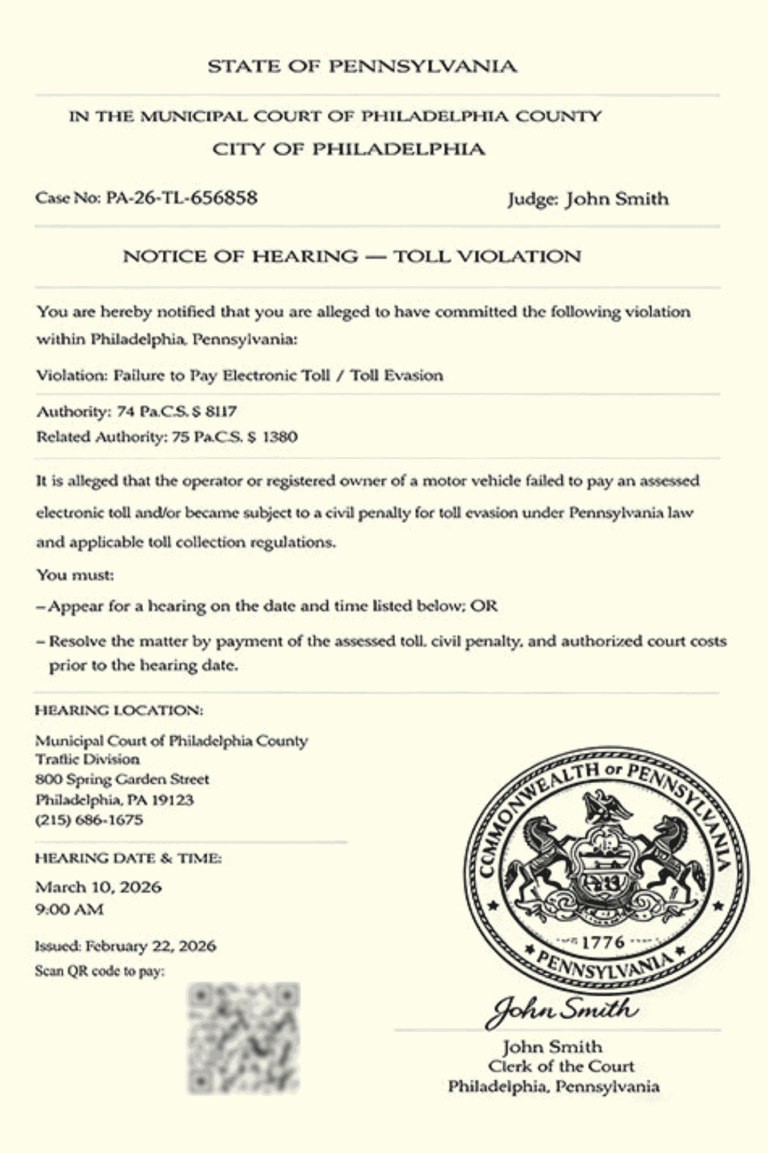
A fake Notice of Hearing for a Toll Violation from the Municipal Court of Philadelphia County, with the violation being Failure to Pay Electronic Toll/Toll Evasion. The fake notice includes hearing location and contact information, and is signed by John Smith, Clerk of the Court.

QR Code Toll Scam

How it works:

  1. The recipient scans the QR code with their phone or tablet
  2. The device opens a website
  3. The fake toll payment page appears
  4. The victim is asked to enter their personal information
  5. The victim enters payment information
  6. The scammer collects the information
  7. The scammer uses the information to make fraudulent purchases